History Of Hemp In America
 by 167K
  by 167K
Hemp has very recently become popular again. But for many years, the hemp plant was demonized by being identified with marijuana (cannabis).
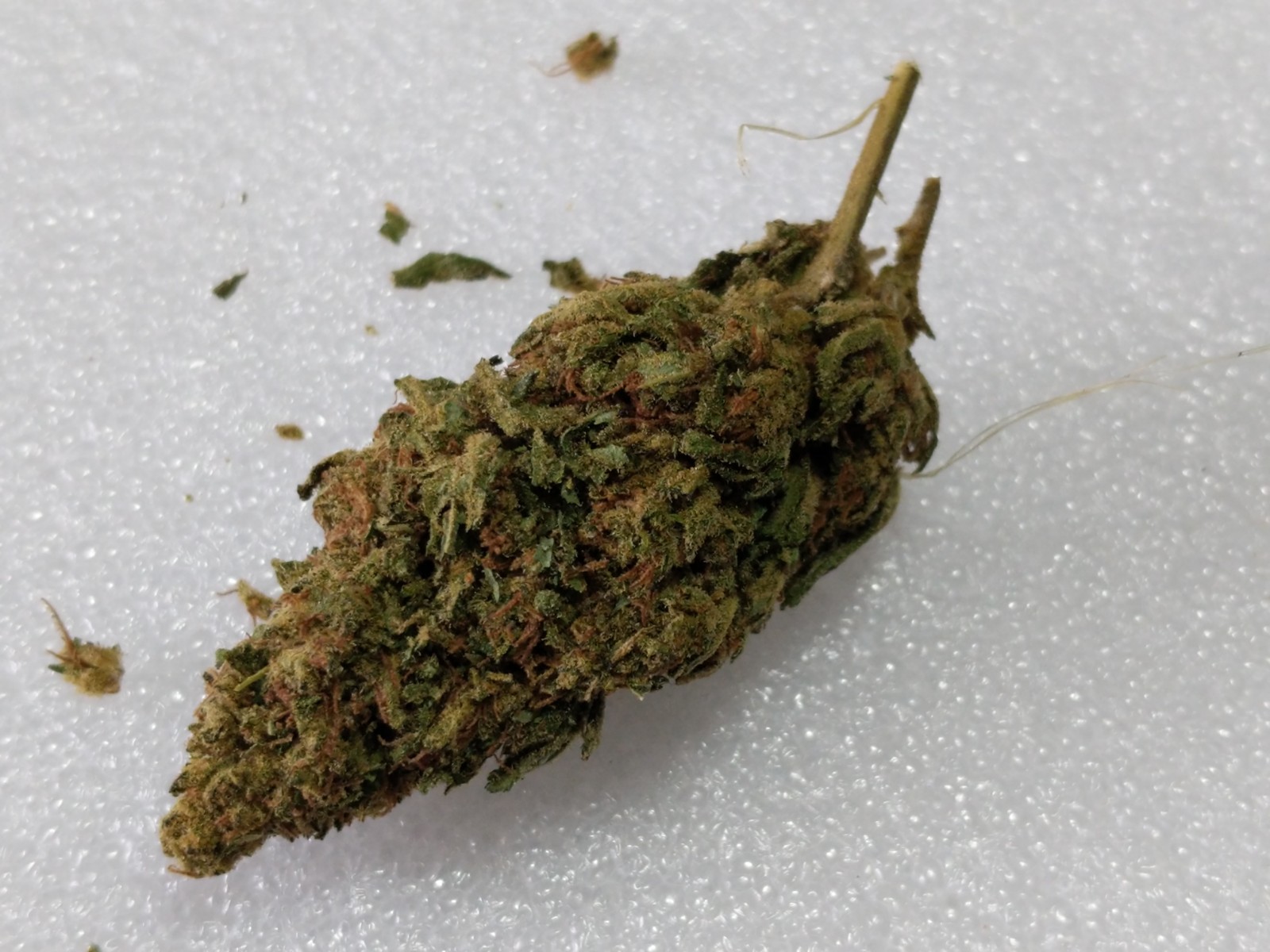
Now that people are becoming better educated concerning the important differences, products including CBD oil and CBD buds are becoming extremely popular.
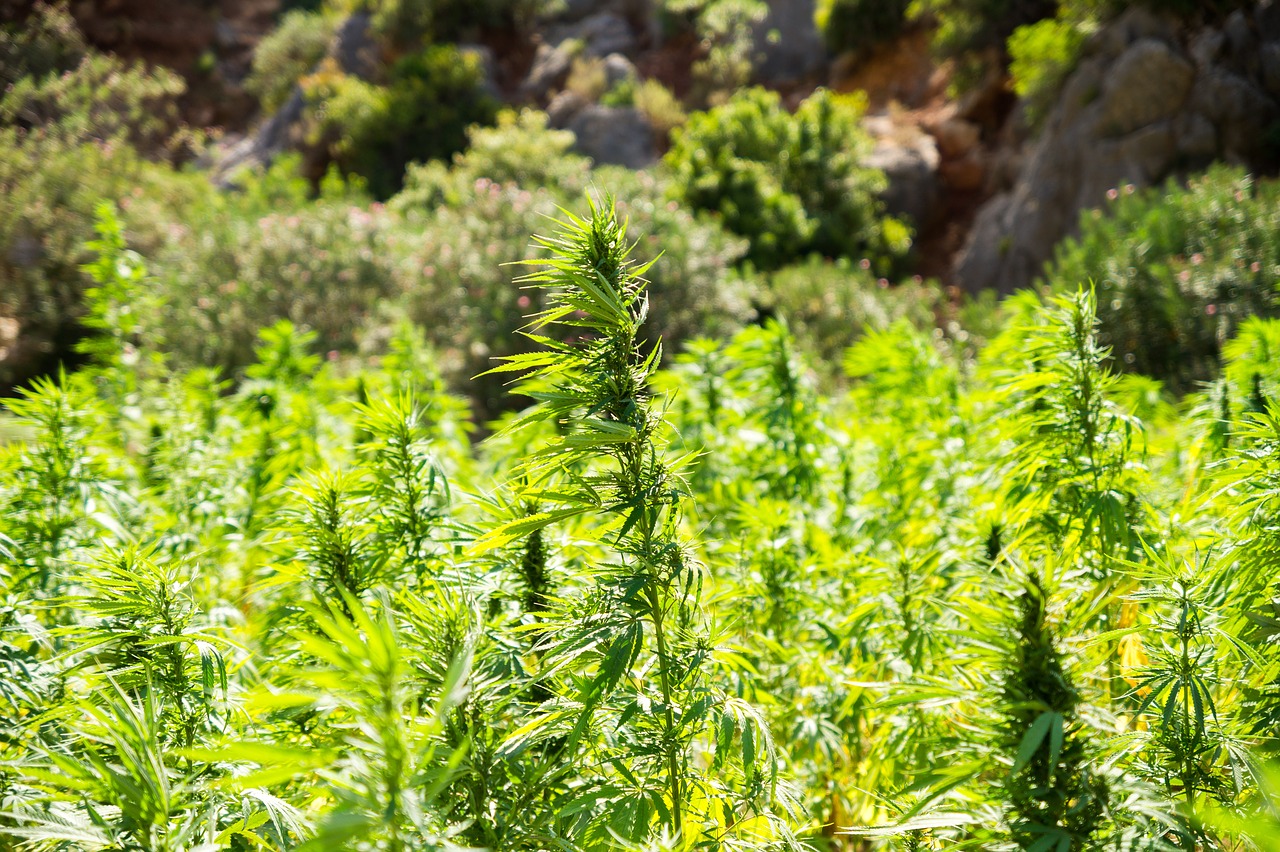
It may come as a surprise that hemp actually has a very long history in America. For many years it was a very highly prized crop!
In 1619, because hemp was such an important resource, it was illegal not to grow hemp in Jamestown, Virginia. Massachusetts and Connecticut had similar laws. During the 1700s, subsidies and bounties were granted in Virginia, Pennsylvania, New York, New Jersey, North & South Carolina, and the New England states to encourage hemp cultivation and the manufacturing of cordage and canvas. Unfortunately, these actions failed to establish a permanent hemp industry in any of these states.
Most hemp used for naval purposes was imported. During the first six months of 1770, the colonies imported over 400 tons of hemp from Great Britain, 3,400 tons in 1800, and about 5,000 tons were imported each year between 1820 and 1840, which compares to the domestic production in the 1800’s, usually in the 5,000-10,000 ton range, except in the 1840s and ’50s when 30,000-plus tons of hemp were annually produced.
In 1839, the Navy’s showcase ropewalk in Charlestown, Mass., used 2,733 tons of hemp: 2,500 tons Russian hemp, 200 tons Manila hemp, 33 tons American hemp. This quarter-mile ropewalk was constructed of granite walls and a slate roof that still stands strong. [Editor’s note: “ropewalk” = a long, covered walk, or a low, level building, where ropes are manufactured]
Kentucky first planted hemp near Danville in 1775. In 1790, hemp fiber was first advertised for sale in local papers. The hemp industry rapidly expanded and Kentucky became the industrial centre for the next 100 years. Most of Kentucky’s hemp was grown in the “bluegrass” region that includes Fayette, Woodford, Jessamine, Garrard, Clark, Bourbon, Boyle, Scott and Shelby counties. In 1811, there were almost 60 ropewalks in Kentucky, and by the late 1850s, more than one-third of the 400 bagging, bale rope and cordage factories in America were located there. Later in the century, the production of cordage and bagging did not prove to be profitable using domestic hemp, so production was ceased as imported Manila and jute fibers were substituted.

Hemp was first grown in Missouri in 1835. By 1840, the “Show Me” state produced 12,500 tons. During the Civil War, Confederate Missouri State Guardsmen advanced behind mobile breastworks made of hemp to defeat the Union troops entrenched at the Masonic College, in Lexington, Missouri. The battlefield grounds can still be toured, and every three years in September, a reenactment is held. Hemp was grown in the eastern part of Illinois near Champaign and Rantoul from 1875 to 1902. Trial crops were grown successfully near Houston, Texas in 1899 and 1900.
Nebraska’s hemp industry existed between 1887 and 1910 near Fremont and Havelock. In 1910, the areas of hemp cultivation outside of Kentucky included fields near Lincoln, Nebraska, Kouts and North Liberty, Indiana, and Hanover, Pa. It was also being grown experimentally in Michigan, Minnesota, Iowa and Arkansas. California, too, grew hemp in many areas from around 1900 to around 1920, including Gridley in Butte County, the Courtland in the lower Sacramento Valley, Rio Vista in Solano County, and Lerdo near Bakersfield. The Wisconsin hemp industry began in 1908 when nine acres were grown in Mendota and Waupun. By 1915, 400 acres were grown and 7,000 acres in 1917.
The leading hemp producing counties in Wisconsin in 1918 were Fond du Lac, Green Lake, Dodge and Racine. Matt Rens, later known as the “Hemp King,” started growing hemp in Wisconsin in 1914, and continued until 1958. Rens built several hemp processing mills and rented equipment to the farmers to sow and harvest their crops. From 1804 through 1929, the average price paid for hemp fiber was close to or below the farmer’s break-even point. Sharp increases in demand and price occurred, usually in conjunction with wars; in European in the early 1800s, the American Civil War, and the two World Wars. In 1915, 8,400 acreages of hemp grew in the U.S.: 6,500 acres in Kentucky, 2,000 acres cumulatively in Ohio, Indiana, Wisconsin and California. Because of the fiber shortage of WWI, Minnesota, South Dakota, Michigan, Kansas, Iowa and Illinois, increased domestic production of hemp to 41,200 acres in 1917.

Hemp rapidly declined in the 1920s. By 1929, only b600 acres of hemp were being grown in the United States, 140 acres in 1933, and no more than 2,000
acres were grown in any year throughout the 1930s. It wasn’t until World War II’s Hemp For Victory campaign that domestic hemp fiber was once again in demand as 146,200 acres were harvested in 1943.
From 1892-1916, America used an average of 11,000 tons a year of hemp fiber, evenly divided between imports at 5,555 tons/year, and domestic production at 5,549 tons/year. This is 4% of the average of 254,462 tons of other imported “hemp” (jute, Manila, and sisal).
Now, let’s compare the hemp figures to “king cotton.” In 1892, 15,911,000 acres of cotton were grown in America; this increased to 34,985,000 acres in 1916. From 1892-1916 2.7 million tons/yr of cotton were produced, 10 times the amount of all other hemp fibers. Economies of scale gave cotton a price advantage over field retted, hand broken hemp fiber. Today, farming cotton uses from 25-50% of the worlds crop chemicals.
The dominance of the cotton industry is often cited as a factor in the demise of the hemp industry. In 1829, the Navy started making its sailcloth out of cotton. Ironically, though, 15 pounds of hemp was needed to properly wrap each 500-pound bale of cotton. Unfortunately, demand disappeared as cheaper jute and metal hoops became commonplace for wrapping cotton bales. Several botanical prints of the era recognize the importance of hemp and cotton.

The need for “naval grade” (i.e., water retted) hemp was apparent because mildew and rot-proof hemp were desirable. As early as 1730, Pennsylvania statutes required the use of water-retted hemp for cordage.
In 1808, the Secretary of the Navy asked for sealed bids to supply the Navy with water-retted cordage.
In 1810, American Ambassador and future president, John Quincy Adams, wrote a detailed description of how high-quality water-retted hemp was produced in Russia.
Despite the prevailing knowledge that water-retted hemp was better suited for naval cordage and the fact that it generally drew a higher price on the market than dew retted hemp, few American hemp farmers adopted the practice.
As late as 1913, Dewey noted that “dew retting is practised almost exclusively”. While a higher price could be received for water-retted hemp, there was a limited market for it.
For American farmers of that time, there was a bigger market for dew retted hemp.

The methods used to harvest and process hemp had a major effect on the cost of producing hemp. In general, mechanical breaking and processing machines were not used, resulting in a higher cost per acre and lower quality fiber. In 1824, the Hines and Baines Machine for breaking flax and hemp was being used with great success in Ohio.
In 1828, this machine was used in conjunction with water-retting to produce hemp fiber “fully equal if not superior in quality to the best of Russian Hemp.” This machine only needed half of its hurd by-product to power its steam engine, saving “two cords of wood a day.”
While inventions relating to cotton were continually modified and improved, the evolution of hemp machinery lagged. In 1913, Lyster Dewey reported for the USDA that “more than three-fourths of the hemp fiber produced in Kentucky is broken out on the hand break”. This lack of progress unquestionably stunted the growth of America’s hemp industry.

Another factor affecting the demand for hemp was a lack of markets. Cordage, twine, and bagging were the primary items for which hemp was used. As late as 1916, hemp hurds was considered a waste product and hemp seed was only used as birdseed, not as food. Jason L. Merrill wrote in a USDA circular that “Our forests are being cut three times as fast as they grow.” Dewey (his co-researcher) and Merrill knew that using hemp for paper could prevent deforestation and help save the environment. Despite the knowledge that hemp produced a more efficient superior grade of paper, wood pulp continued as the primary source of paper.
The hemp industry operated under the well-known principles of a capitalist society where supply and demand determined the price. People decided to grow or process hemp based on the amount of money that they could receive for it.
But the laws of supply and demand were effectively thrown out the window starting in the 1930s when the market wrecking pogrom that is Reefer Madness was unleashed on an unsuspecting populace. Hemp’s association with marijuana undoubtedly caused reluctance in farmers to grow it, while the bureaucratic red tape surrounding the enforcement of the Marihuana Tax Act of 1937 effectively regulated the hemp industry out of existence, destroying a huge money market in the process!
In 1940, Dr. Roger Adams and his team discovered cannabidiol(CBD) at their lab located at the University of Illinois. Its structure was not fully discovered until 1963. Cannabidiol is extracted mainly from the leaves and flowers of industrial hemp and its primary use is the manufacture of CBD oil.

The current demand for hemp fiber is still relatively low, although new uses for it continue to be developed.
The energy crisis is shining new light on renewable crops, such as hemp, as a source of energy.
The value of the cellulose-rich hemp hurds as a source of paper, building materials, fuel and animal bedding is now universally recognized, and the multitude of nutritional benefits contained in the hempseed are manifesting themselves in numerous foods and health care products.
However, until hemp can once again operate in the free market it will not even be given the chance to succeed.
Delegates for the American Farm Bureau Federation again adopted language endorsing research and domestic cultivation of industrial hemp.
The AFB passed a resolution to “encourage research into the viability and economic potential of industrial hemp production in the US, including planting test plots using modern techniques.”
The AFB said they dropped their opposition to hemp because farmers are in need of alternative crops.
Hawaii Experimenting with Hemp as Crop
Dec. 1999: DEA permits Hawaii to plant industrial hemp. State Rep. Cynthia Thielen, an Oahu Republican, sponsored the bill creating the university research project. The research project received $200,000 from Alterna, a haircare company that uses hemp seeds in products. The project was created to attempt to develop an agricultural hemp plant suited for Hawaii’s climate.
The test plot was surrounded by a 12-foot-high fence and infrared surveillance in accordance with DEA rules, which allowed a strict two-year permit. The DEA and the White House’s Office of National Drug Control Policy previously held that permitting hemp farming would send the wrong signal to young people and would allow marijuana farmers to hide their crops with industrial hemp plants.
2000:
On April 14, Joe American Horse announced on KILI Radio that to be sovereign the tribe must act sovereign, so accordingly, he will plant industrial hemp seeds on April 29, 2000 to advance the authority of the Oglala Sioux Tribe in the matter of jurisdiction over tribal lands.
Federal agents seized at least 2,000 marijuana plants from land on the Pine Ridge Indian Reservation, with helicopters and machine guns, costing taxpayers an estimated $200,000. The contradictory nature of the drug war came home to Pine Ridge August 24, 2000, as federal agents cut down and seized the one-acre field of hemp plants growing at Alex White Plume’s home near Manderson, SD.
The landowner, Alex White Plume, called them industrial-grade hemp plants and said the Oglala Sioux Tribe allowed him to grow the crop. The Tribal Council removed barriers to industrial hemp production in 1998.
A trailer full of Canadian hemp was sent to the Pine Ridge Indian Reservation, courtesy of the Kentucky Hemp Growers Cooperative Association and the Madison Hemp & Flax Company.
The hemp replaced thousands of plants seized by federal authorities in August from two test plots on the reservation. The crop was to be used for hemp bricks and other building materials. Former Gov. Nunn of Kentucky turned over the trailer load of industrial hemp to Milo Yellowhair at Pine Ridge.
The Navajo Nation Council approved amendments to Navajo law, which distinguish between industrial hemp and marijuana.
On August 25, 2000, in Beattyville, Kentucky, a Lee County jury acquitted actor Woody Harrelson on a misdemeanour charge of marijuana possession, ending his four-year court battle to get the state to differentiate between hemp and marijuana. Harrelson could have been sentenced to a year in jail and fined $500 if convicted.
“I had the opportunity to talk to some of the jurors afterwards, and, regardless of what the Supreme Court says and regardless of what the legislators say, those people don’t think it’s right that someone should go to jail for growing industrial hemp,” Harrelson said.
He planted four hemp seeds in June 1996, knowing he would be arrested, to challenge the law outlawing possession of any part of the cannabis plant. The planting was videotaped and shown to the jurors.
Through three courts, he had argued that the statute is unconstitutional because it does not distinguish between marijuana and hemp.
Former Gov. Louie Nunn, who was on Harrelson’s defence team, said he had expected the verdict. “Now it’s time to start promoting the growth of hemp so we can have a great economic future in Kentucky,” Nunn said.
Hemp was one of the state’s leading crops throughout the 1800s.
Green Party presidential candidate Ralph Nader criticizes federal agencies for making it difficult for farmers to grow the crop. Nader also spoke out against the raid on a South Dakota Indian reservation in which federal agents seized at least 2,000 plants described as industrial-grade hemp plants by the crop’s owner.
2000-2002: Alex White Plume grows hemp on Pine Ridge Lakota Sioux reservation in SD and the DEA destroy the crops near harvest time, not making any arrests, thereby distinguishing between marijuana and hemp.
Nov. 2000: Alex White Plume and his family receive hemp from the Kentucky Hemp Growers to replace the hemp destroyed in the two years prior by the DEA.
2001:
“My company, The Body Shop, has been an international pioneer in the renaissance of industrial hemp. We campaign so passionately on its behalf not only because hempseed oil has proved so successful for usÑour hemp range of skincare products will account for almost 4 per cent of total sales in 2000 (our annual sales in 1999 were $996 million)Ñbut also because we believe its countless applications make industrial hemp equally promising for other businesses.”
On Earth Day (April 22, 2001) more than 1,000 Staples Superstores across the country offer reams of Vanguard Recycled Plus, a 90% post-consumer waste, 10% hemp paper manufactured by Living Tree Paper Company, from Eugene, Oregon. An acre of hemp crops can produce as much paper as an acre of trees over a 20-year growing cycle.
Italian Designer Giorgio Armani Starts Cultivating Hemp in Italy
His company will take part in a consortium of farmers, seed producers and industrialists. This consortium will restart the hemp cultivation in the Italian countryside forgotten for decades.
So. Dak. Industrial Hemp Council gets hemp bill on the ballot – Plants hemp in Capitol flower bed
“We kicked off the petition drive by planting hemp seeds at the Custer County Court House a year ago. We’ll end it by planting hemp seeds at the state capitol building in Pierre,” said Bob Newland, Founder of the South Dakota Industrial Hemp Council, who adjourned to the base of the Capitol steps facing Capitol Avenue in Pierre. There, in a long, narrow flower bed about 20 feet from the base of the steps, the group planted more than 500 hemp seeds. Although SDIHC had notified both law enforcement and the press of its intentions, there were no representatives of either law enforcement or the press at the scene.
An auto that ran on hemp bio-diesel toured North America in the summer of 2001. The tour completed 13,000 miles, 50 cities, 92 days, 462 interviews, 600 gallons of hemp fuel, and 8782 photos. Through international media outlets, the hemp car was seen by over 150,000,000 people. The diesel engine was originally designed to run on vegetable oil. Hemp retails for over $40 a gallon as a food oil though, so don’t expect hemp to be turned into fuel in the near future because of its value as a food crop.
Nutritious hemp oil is emerging as an alternative to toxin-tainted fish oil
Although consumption of fish is widely touted by medical and nutrition experts as good for the heart and overall health, in large part due to its content of essential fatty acids, more and more medical studies are raising concerns due to levels of mercury in fish. There is a healthy alternative to provide the essential fatty acids and other key nutrients that is becoming widely available in the U.S.: organic hemp seed oil.
2001: “Hemp car” crosses North America using hemp bio-diesel fuel, stops in Watertown SD.
Oct. 9, 2001: DEA arbitrarily bans all hemp foods in order to disrupt the domestic market. Hemp importers and their supplier’s sue. Supreme Court temporarily enjoins implementation of DEA’s unilateral proclamation. Still in court.
2002
After Alex White Plume’s second hemp crop was destroyed again in 2001 by the feds, he again planted in 2002. This time he pre-sold his crop to Madison Hemp and Flax of Lexington, KT. As he harvested in Aug., he was served with an injunction, signed by Judge Battey, prohibiting him (or his “agents, assigns, heirs, family, or employees”) from so much as touching his hemp crop without being held in contempt of court and jailed without so much as a trial or a jury. The White Plumes took the case to court.
May 2002: South Dakota becomes the first state to get the issue of industrial hemp farming on the state ballot. A poll indicates that 85% of registered South Dakotans favour legalizing industrial hemp.
Aug 2002: Alex White Plume becomes the first farmer since 1968 to cultivate and sell a hemp crop in the United States. The crop is bought by Madison Hemp & Flax, a Kentucky company.
Nov 2002: So. Dak. voters reject industrial hemp, but 38% vote for it. Hemp wins on Indian reservations.
2003:
On April 16th, 2003, the Ninth Circuit Court granted the hemp industry’s Motion to Stay, putting the brakes on the DEA’s rule that would ban the sale of hemp foods within the United States. The new “Final Rule,” issued on March 21, 2003, is virtually identical to an “Interpretive Rule” issued on October 9, 2001, that never went into effect because of a Ninth Circuit Stay issued on March 7, 2002. On March 28, 2003, the Hemp Industries Association (HIA), as well as the Organic Consumers Association petitioned the Ninth Circuit to once again prevent the DEA from ending the legal sale of hemp seed and oil products in the U.S. Hemp advocates say that the public and Congress need to hear from outraged citizens.
In Frankfort, KT, a former teacher will receive $70,000 from the Shelby County School District to settle a lawsuit she filed claiming she was wrongfully fired for promoting the legalization of hemp.
Cockrel’s decision to end the 1995-96 school year with a project entitled “Saving the Trees,” in which the use of industrial hemp fibers as a possible alternative to wood pulp was to be discussed, Cockrel was contacted by a representative of the Cable News Network and asked if she would permit CNN’s cameras to film her class presentation for use in a larger program on tree conservation.
In early May 1996, Joe Hickey, president of the Kentucky Hemp Growers Association, informed Cockrel that Woody Harrelson might visit Kentucky with CNN and that Harrelson might also visit her classroom. Cockrel informed Principal Slate of the impending visit, and he agreed to allow it.
Harrelson made two trips to the Simpsonville school in 1996 and 1997. School officials approved both visits. In July of 1997, the school board fired Cockrel. The suit was filed in 1997 and was finally settled in Summer of 2003. Cockrel now teaches in Detroit.
Paul Benhaim, one of the founders of the modern hemp industry revival, has created a CD entitled ‘Fields of Green.’ The CD insert is made of hemp paper and the CD tray is made of hemp plastic, a revolutionary new eco alternative to petrochemical plastics and a commercial first. This CD is a showcase of the amazing versatility of the hemp plant. The didgeridoo heard on the CD is made of hemp stone Ð an amazing new material made using just hemp and water.
Hemp Bale Building At Hempola Valley Farms
In the village of Dalston in Canada, Hempola Valley Farms constructed an octagon Ôround house’ using hemp straw bales. Unique in its design and numerous details focused on environmental responsibility, the structure is deemed the first hemp straw building in North America, maybe the world. The Ôbale raising’ happened in May, and it was occupied on Sept. 12th, 2003.
2004
From Aug 25th to 29th, 2004, thirty hemp enthusiasts from all over the country publicly harvested and manufactured hemp on the Pine Ridge Res. in accordance with the 1970 Controlled Substance Act, at the 3rd Annual Lakota Hemp Days.
Scientists at the Univ. of Exeter, in Devon, UK, will spend 400,000 pounds on a research project aimed at making brake pads from natural fibers such as jute, hemp, nettle, and flax to replace the Kevlar, lead, and antimony used in brakes today.
David Wise of Hemp Fed Beef Company uses 400 pounds of soybean, 200 pounds of distiller’s grain, and 100 pounds of hemp, which acts as a nutritional uptake catalyst, as feed for his cattle, which enables the cattle to gain lean muscle mass. The high protein (30+%) and big essential fatty acid feed has made Wise’s cattle healthier, happier, and heftier. Craig Lee, of Madison Hemp and Flax Company, who says Hemp-fed cows taste better, gets Wise his 1200 pounds of hemp meal at $1.10 per pound from Canada. Lee added, “Because of the high oil content and the fatty acids, the animals actually utilize more of their feed.” “They digest more of it, which means the farmer is getting more out of his feed.” Hemp Fed Beef Company’s feed are ASH (antibiotic, steroid, and hormone) free.
Composite America, an upstart Fargo, ND company, is operating a plant that moulds fabrics containing hemp, flax, and jute into interior panels for machinery, vehicles, and aeroplanes. After learning that natural fibers are starting to be used by U.S. automakers for car interiors and that BMW, Mercedes, Volvo, and Audi, have been using the fibers for more than a decade, Scott Greelis, president, put together a team of investors to develop the company. They found that industrial-grade hemp is sought by industries because of the strength of the long fibers.
Composite America searched for niche markets, rather than aiming at automotive industries, because the overhead to produce at Detroit-production volumes would be extremely costly.
Composite America purchased a thermoforming press machine from a German company and now has inked contracts with Bobcat, of Gwinner, N.D, to make interior panels for its skid-steer loaders and for its new Tool Cat vehicles in production in Bismarck, ND, and with Arctic Cat, of Thief River Falls, Minn., and Polaris, of Roseau, Minn., to make engine hood liners for snowmobiles.
Composite America also creates panels for the cockpits of Cirrus aeroplanes, which have manufacturing facilities in Duluth, Minn. and an assembly plant in Grand Forks, N.D. Cirrus will produce 550 aeroplanes in 2004.
The Indoor Tanning Association representing thousands of businesses and the Hemp Industries Association’s 200 member companies received clarification from the United States Air Force Surgeon General’s Office that hemp skincare products are “not prohibited” under a policy dating back to 2001 that bans ingestion of hemp foods by Air Force personnel.
The North American trade groups sought clarification of the Air Force policy on hemp sunblock and other personal care products that contain hemp seed oil after reports first published April 23rd in Mach Meter, the Online Publication of Cannon Air Force Base, raised concerns that items could cause false positive drug tests.
The false story was picked up by the Associated Press and then reported on at least 27 local and cable TV stations in May 2004, damaging various American body care businesses. The reports misled the general public into thinking they should not use hemp oil sunblock and tanning lotions because they allegedly could cause positive drug tests for marijuana and trigger drug sniffing dogs, which is untrue.
The Ninth Circuit Court of Appeals ruled in February 2004 that foods made with hemp cannot be regulated by the DEA. The three-judge panel concluded that, since “non-psychoactive hemp products” are not on the DEA’s list of dangerous drugs, the Administration has no jurisdiction over their sale. The Ninth Circuit ruled that the DEA ignored the specific Congressional exemption in the Controlled Substances Act (CSA) that excludes hemp fiber, seed and oil from control. In June 2004, though, the Ninth Circuit Court agreed to re-hear its decision that the DEA cannot ban foods containing hemp. The court did not reverse its original decision on rehearing, and the DEA let its deadline pass for appealing the case to the United States Supreme Court. Three years after it was proposed, the hemp foods ban is dead.
Ruling under the Equal Access to Justice Act (EAJA), the Ninth Circuit Court of Appeals has ordered the DEA to pay $21,265 to Dr Bronner’s Magic Soaps to compensate them for a portion of their legal fees in HIA v. DEA.
“The EAJA allows an award of attorneys fees in this situation only where the court finds the Government’s position was not ‘substantially justified,'” said Joe Sandler, HIA’s counsel in the case. “By making this award, the Court has basically decided that DEA’s attempt to outlaw hemp foods never had any real legal merit.”
Feb. 2004: 9th Circuit US Court of Appeals holds that DEA can not regulate hemp foods.
2005
Billions of Wild Drug-Free Hemp Plants Eradicated by DEA in Effort to Confiscate Cultivated Marijuana Since 1984
The DEA has funded the destruction of 4.7 billion non-psychoactive industrial hemp plants (also called “ditch weed”) since 1984. This massive annual eradication effort stands in sharp contrast to farmers across the globe continuing to legally produce industrial hemp for export to the United States.
According to data collected by the DEA’s Domestic Cannabis Eradication / Suppression Program, 218.6 million ditchweed plants were eradicated nationwide in 2005 versus only 4.2 million marijuana plants. This means that 98.1% of all cannabis plants eradicated in 2005 were actually industrial hemp. The ditchweed is primarily being eradicated in mid-western states where it was once grown to support WWII efforts with the encouragement of the federal government.
The massive ditchweed eradication program has cost federal and state governments at least $175 million since 1984. The DEA spent $11 million in 2005 on DCE/SP grants to state police alone.
How the DEA collects their own data on ditchweed, which is sometimes referred to as feral hemp, is puzzling because of officials at the DEA regularly stating there is no difference between hemp and marijuana. Nevertheless, their own statistics clearly differentiate between ditchweed and “cultivated marijuana” plants that are destroyed.
The late summer timing and removal methods cause countless ripe seeds to fall to the ground where they will sprout again the following year.
A nationwide leader, Indiana has eradicated, on average, 65 million wild hemp plants per year from 1984 through 2005, compared to the eradication of 114,699 cultivated marijuana plants per year in the same time period. Marijuana eradication requires that state police work overtime during the summer and wasted nearly 31,000 hours of officer’s time in each of 2003 and 2004, for example, accounting for 8.9% of the criminal related hours for the state police during those years.
Ironically, FlexForm, an Indiana manufacturer whose hemp-content materials are found in an estimated 3 million vehicles in North America today, uses approximately 250,000 pounds of hemp fiber per year, which it must import from Canada and Europe.
Federal Judge Calls DEA’s Views on Hemp Farming ‘Asinine’ in Case Over Industrial Hemp & Tribal Sovereignty
In St. Louis on Dec. 12, lawyers Bruce Ellison and David Frankel, representing Alex White Plume and his family of the Lakota Nation who live on the Pine Ridge Reservation, made oral arguments in the Eighth Circuit U.S. Court of Appeals in front of a three-judge panel to reverse efforts by the DEA to place an injunction preventing the White Plumes from growing industrial hemp.
Judge Kermit Bye and Judge Arlen Beam were focused on two issues: (1) the irrationality of allowing the exempt parts of the plant to be imported into the U.S., but not allowing industrial hemp to be grown in the U.S. and (2) the lack of any rational permitting process by the DEA. Judge Beam commented, “It seems asinine to me that they can bring in the Canadian stuff and use it but can’t grow it.” Beam also suggested that it did not make sense that Congress would try to make the economy of Native American tribes more enhanced by casino gambling, but not allow industrial hemp cultivation.
The White Plumes assert their right to raise non-psychoactive industrial hemp as an exercise of their sovereign rights pursuant to an Oglala Sioux Tribal ordinance enacted to secure rights guaranteed by the Treaties of 1851 and 1868 signed between the Lakota Nation and the U.S.
Nevertheless, the U.S. government maintains that its asserted “trust responsibility” gives it the final authority to decide appropriate uses of reservation lands.
The DEA sought a permanent injunction to prevent the White Plumes from growing industrial hemp without federal permission because the DEA has placed a de facto ban on non-psychoactive industrial hemp farming in the U.S. by treating it as if the crop were the same as drug/medical marijuana. Late last December, the court granted the government’s motion for summary judgment, which led to the appeal to the Eighth Circuit Court of Appeals.
The Eighth Circuit ruled that the White Plume family could not cultivate hemp and that congress should ultimately decide.
Green Krete, a company in Fairfield, Iowa, builds hemp blocks that are a mixture of hemp and ceramic cement, similar to building material used in Europe for 1000 years. These load-bearing and natural hemp-fibre blocks can be drilled, sawed, nailed or screwed; plus channels are routered for electrical and plumbing. Thin-set mortar is applied with notched trowels. Finishes can include plaster, stucco, siding or brick veneer, etc.
The hemp blocks’ high thermal-mass capacity stores energy and releases it gradually integrates allowing the home to remain cool in summer, yet warm in winter.
Green Krete’s hemp block method allows for excellent sound insulation, fire-resistant, resistant to rodents, termites, insects, and resistant to fungi, mould and mildew. Check them out at greenkrete.com.
Some members of Congress are trying to change the federal ban in order to allow states to regulate hemp farming, which marks a major milestone for the hemp movement in America. H.R. 3037, the Industrial Hemp Farming Act of 2005, was introduced in the summer of Ô05. At a Capitol Hill lunch on June 23 about 100 congressional staff feasted on Bahama Hempnut Crusted Wild Salmon and Fuji Fennel Hempseed Salad. Executive Chef Denis Cicero of the New York City-based Galaxy Global Eatery prepared the five-course gourmet hemp meal.
Chief sponsor Rep. Ron Paul (R-TX) wrote the bill with the help of Vote Hemp, and it garnered 11 additional co-sponsors. The bill defined industrial hemp and assigned authority over it to the states, allowing laws in those states regulating the growing and processing of industrial hemp to take effect.
“It is unfortunate that the federal government has stood in the way of American farmers, including many who are struggling to make ends meet, competing in the global industrial hemp market,” said Dr. Paul. “Indeed the founders of our nation, some of whom grew hemp, surely would find that federal restrictions on farmers growing a safe and profitable crop on their own land are inconsistent with the constitutional guarantee of a limited, restrained federal government. Therefore, I urge my colleagues to stand up for American farmers and cosponsor the Industrial Hemp Farming Act.” Dr. Paul was joined by five original co-sponsors, including Reps. Sam Farr (D-CA), Pete Stark (D-CA), Jim McDermott (D-WA), George Miller (D-CA) and Raœl Grijalva (D-AZ). The bill may be viewed here.
At the luncheon consumer advocate Ralph Nader called the U.S. ban on hemp farming “bureaucratic medievalism” because over 30 industrialized countries are growing hemp and the U.S. is the number one importer of the crop, but won’t allow domestic cultivation.
2006
Adnams, the Suffolk-based (Great Britain) brewer, has completed one of the most energy-efficient breweries ever built in September 2006. The £6 million building utilizes materials and concepts which have been developed and applied in Europe by Lhoist for over a decade, and its knowledge of lime-based building products, Lime Technology Ltd developed Tradical¨ Hemcrete¨ as a sustainable alternative to traditional masonry.
The walls are diaphragm structures built using 100,000 compressed, lime blocks and infilled with Tradical¨ Hemcrete¨. 150 tones of CO2 has been locked up in the Tradical¨ Hemcrete¨ infill of the walls, which is equivalent to 1.5 million miles worth of emissions from a Ford Escort or sixty times around the Earth.
The walls of a conventional building of the same size would have been responsible for up to 600 tones of CO2 emissions and therefore, the Adnams warehouse has made a potential saving of up to 750 tones of CO2, by using the Tradical¨ Hemp Lime technology in its construction. The project also uses Lime Technology’s lime mortar, plaster and render.
The combination of patented air-lime based binders and the woody core of the industrial hemp plant results in the capture of significant amounts of carbon from the atmosphere. Hemp, in common with all similar plants, transforms carbon dioxide during its rapid growth and captures the carbon, releasing the oxygen to the atmosphere.
This has an immediate positive effect in achieving the sequestration of the principal greenhouse gas and furthermore, this captured carbon is then locked into the fabric of the buildings constructed. Finally, when the air-lime based binder sets, more carbon dioxide absorption occurs which all contributes to reversing the carbon debt.
High insulating properties of the Hemp Lime walls means that the 4,400m2 distribution centre has the ability to maintain the internal temperature at 11-13 degrees centigrade without any mechanical cooling or heating system. The ability to store the thousands of bottles of beer and wine in these conditions is due to the outstanding thermal performance of the Tradical¨ Hemcrete¨ filled diaphragm block walls.
North Dakota’s Agriculture Commissioner Roger Johnson accepts the first application from a farmer for a state industrial hemp license ND’s Ag. Commissioner Roger Johnson formally proposed rules to license farmers in ND to grow industrial hemp under existing state law.
North Dakota’s rules require farmers to secure a permit from DEA, the farmers would have to undergo criminal background checks, the planted hemp must contain less than .03% THC, and the GPS coordinates of the field must be provided.
The license will go to the farmer and North Dakota Assistant House Majority Leader David Monson ten years after the first hemp bill was passed in the state. Farmers will make history, as North Dakota is the first state to grant commercial hemp farming licenses in the United States in fifty years.
“I submitted my application for an industrial hemp license with the state Department of Agriculture earlier today,” said Representative David Monson, R-Osnabrock.
“I expect that the state will grant me a hemp farming license, but I’m not sure that the $3,440 non-refundable registration fee I will send to the DEA with my application for manufacturing and importing will get me anything.”
Burton Johnson, an agronomist and professor at North Dakota State University (NDSU), has submitted at least two applications with the DEA since 1999, but has never received a license in those seven years,” says Rep. Monson.
Commissioner Johnson sent a letter to DEA administrator Karen Tandy asking that the DEA waive individual registration fees for newly-licensed industrial hemp producers in North Dakota and that the DEA work with the Agriculture Department so farmers can plant the historic first industrial hemp crop this spring.
2007
Two new non-dairy hemp “milk” beverages, Living Harvest Hempmilkª and Manitoba Harvest Hemp Blissª made their public debuts in January of 2007. The newly developed crop of hemp milk, packing a powerhouse punch of omega-3 essential fatty acids and protein are the latest entries in the continually-growing hemp food market. Both brands come in original, vanilla and chocolate flavors.
Never sold before commercially, hemp milk is high in protein like soy milk, but hemp does not contain the phytic acid and trypsin inhibitors that soy does. Hemp milk is a good source of balanced omega-3 and omega-6 fatty acids, unlike rice milk, and it also contains a wide range of naturally-occurring vitamins and minerals, including Vitamin E, Folic Acid, Iron, Niacin, Magnesium, Phosphorus, Potassium, Thiamin and Zinc.
Hemp milk is a refreshing alternative to nut- and grain-based beverages as well as dairy beverages. Grain-based beverages are often lacking in essential fatty acids (EFAs), protein and minerals, unless they are fortified. Nut-based milk and dairy beverages are nutritionally better, but more and more people, especially children, are developing allergies to tree nuts and dairy products.
On February 13, 2007 Rep. Ron Paul introduced H.R. 1009, the “Industrial Hemp Farming Act of 2007,” with nine original co-sponsors: Representatives Tammy Baldwin (D-WI), Barney Frank (D-MA), Raœl Grijalva (D-AZ), Maurice Hinchey (D-NY), Dennis Kucinich (D-OH), Jim McDermott (D-WA), George Miller (D-CA), Pete Stark (D-CA), and Lynn Woolsey (D-CA). The bill would have clarified a state’s right to grow hemp. The bill excludes industrial hemp from the definition of “marihuana” in the Controlled Substances Act and gives states the exclusive authority to regulate the growing and processing of industrial hemp under state law.
“It is indefensible that the United States government prevents American farmers from growing this crop. The prohibition subsidizes farmers in countries from Canada to Romania by eliminating American competition and encourages jobs in industries such as food, auto parts and clothing that utilize industrial hemp to be located overseas instead of in the United States,” said Dr Paul. “Bypassing the Industrial Hemp Farming Act the House of Representatives can help American farmers and reduce the trade deficit Ñ all without spending a single taxpayer dollar.”
The National Association of State Departments of Agriculture (NASDA) “supports revisions to the federal rules and regulations authorizing commercial production of industrial hemp.” The National Conference of State Legislatures (NCSL) has also passed a pro-hemp resolution.
On June 18, 2007, the two North Dakota farmers granted state hemp farming licenses, Rep. David Monson and Wayne Hauge, filed a lawsuit in U.S. District Court to end the U.S. Drug Enforcement Administration’s obstruction of commercial hemp farming in the US.
Monson and Hauge applied for their permits to cultivate hemp in January 2007 from the DEA after proper background checks were made. The cost per farmer to apply was $3,440, which is non-refundable. The DEA did not respond in time for spring planting, which prompted the ND legislature to pass a law that removed the DEA from the licensing process. This led to this issue being heard in the Eighth Circuit Court.
The court declared that Congress be the proper venue for this discussion, thus washing its hands of observing the criminality of the DEA.
The DEA has banned hemp farming for 50 years by conflating hemp and marijuana on no legal basis while imports of hemp fiber, seed and oil are allowed. With North Dakota regulating industrial hemp, there are no reasonable threat farmers would be able to grow marijuana without being caught.
Schwarzenegger vetoed AB 684, The California Industrial Hemp Farming Act, rejecting the will of the majority of Californians, who supported the landmark, bipartisan legislation, which would have followed North Dakota in establishing guidelines for the farming of industrial hemp.
California businesses spend millions of dollars each year importing hemp from Canada, China and Europe. Demand for hemp products has been growing rapidly in recent years. The North American hemp market now exceeds an estimated $300 million in annual retail sales. Every mainstream grocery and natural food store’s aisles will have stacks of hemp food in the coming decade.
2008
A week before the official opening of New York Fashion Week, on the evening of January 31 in the elegant sophistication of New York’s Gotham Hall, two dozen internationally-recognized designers displayed their latest creations to a waiting high-powered audience at the Earth Pledge eco-fashion show FutureFashion. The fabric supplied by Hemp Industries Association (HIA) member EnviroTextiles, designers like Donatella Versace, Behnaz Sarafpour, Ralph Lauren, Donna Karan International, Isabel Toledo, Calvin Klein, and Doo Ri wove their magic with everything from hemp/organic cotton jersey knits to hemp/silk charmeuse.

This article appeared in the print version of Hemphasis that we published in late 2004.
John Dvorak is the founder of the Boston Hemp Co-op, curator and webmaster of the Hemp History Library and Museum (hempology.org).
He is also the Internet Editor for the Journal of Industrial Hemp.
Sources